
Let the Narrative Guide Your Strategic Growth
This spring has been one of those periods where everything seems to connect.
My calendar has been full—meetings, travel, and especially conversations where one idea leads to another, and suddenly you realize you’re not just exchanging updates, but actively shaping direction. Looking back, one theme keeps repeating itself: the importance of letting the narrative carry you forward.

Not passively, but by paying close attention to how your actions resonate. Because very often, the real direction reveals itself in those reactions—and that’s where strategic growth actually begins.
It might sound abstract, but in practice, it’s very concrete.
In today’s AI-driven and hyper-digital environment, there’s a tendency to over-engineer everything. We look for complex systems and optimized solutions, while often overlooking something much simpler: the fact that meaningful progress still comes from human interaction. Trust, vision, and strategic growth are built through actions and the responses they trigger—and those responses tend to travel much further than expected.
This is something I’ve been reminded of constantly throughout the spring.
I’ve spent a lot of time sitting down with artists, programmers, and management teams—people like King Yanz, Sofia Taxell, Merylin Poks, Alexandra Carr at London’s Southbank Centre and Cheltenham Jazz Festival, and Ida Marie Jassen from Alterne. The photos from these moments capture something essential: these are not just meetings, they are real exchanges—spaces where ideas are tested, perspectives challenged, and direction quietly reshaped.
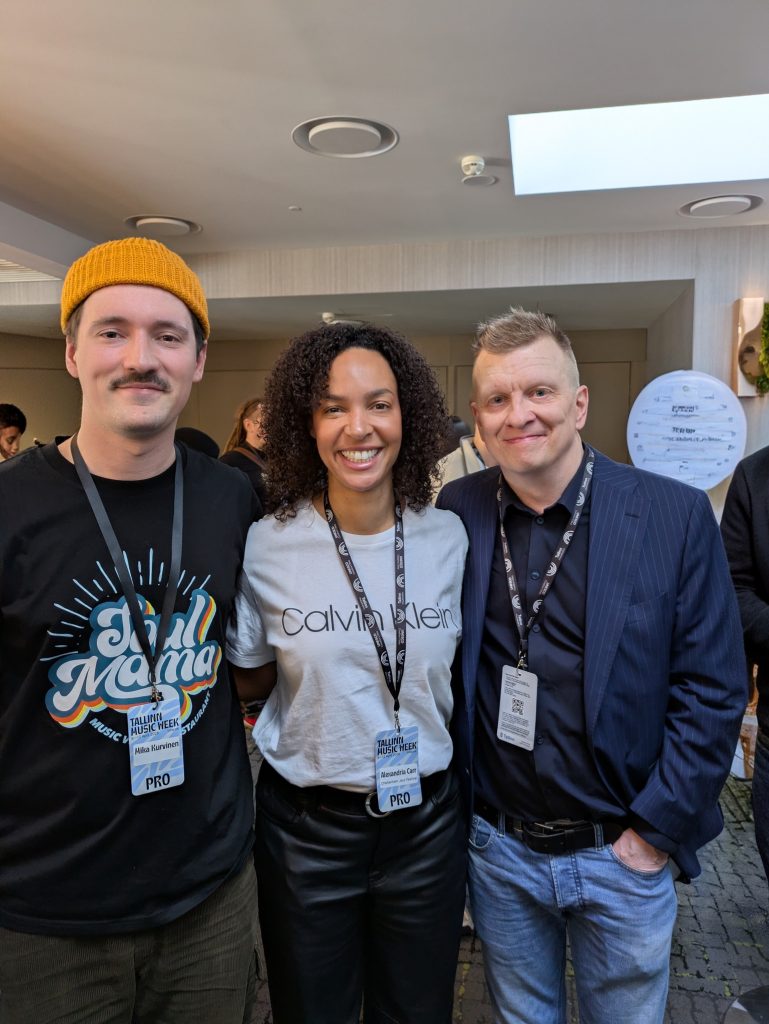
For me, these encounters are genuinely valuable.

I always walk away with new ideas, new angles, or a slightly sharper understanding of something I thought I already knew. And ideally, it works both ways—that they get something out of those conversations as well. It’s a shared process of refinement.
And what I’ve also learned is that you don’t always need to go looking far for what you need. You don’t have to go further than necessary. A lot of the most important insights, opportunities, and connections are already right in front of you—within these very encounters.
What makes it even more interesting is that you never really know in advance what any single moment might lead to. These conversations, along with everything they set in motion, continue to resonate passively online. They circulate, connect, and reappear in unexpected ways—sometimes placing you in situations you couldn’t have predicted at all.
That’s something I experience constantly. But that’s a story for another time.
At the same time, these moments connect directly to the work I do with the artists I represent.
With Misha, for example, in the middle of everything else, we ended up doing a one-off performance in Tallinn—and it turned out to be a great show. Moments like that are a good reminder that not everything needs to be overplanned. Sometimes stepping into the right situation at the right time creates exactly the kind of energy you want to build on.
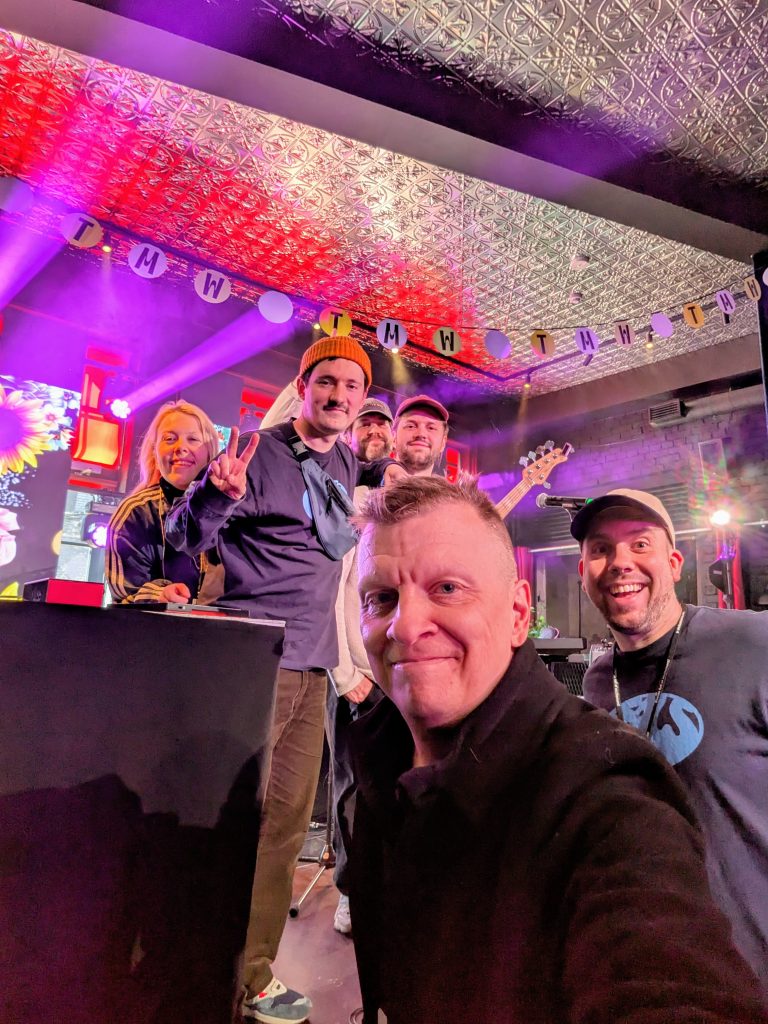
That’s ultimately what the work is about—recognizing those moments and understanding how they fit into the bigger picture.
This same real-time perspective carries into my work as a lecturer.
Standing in front of a classroom only makes sense if what you’re sharing reflects reality. The industry moves too fast for static frameworks. The most valuable moments are when I can take something directly from a conversation, a negotiation, or a live situation, and bring it into the room for analysis.
Teaching forces clarity. It turns instinct into something that can be articulated and tested.
Writing, on the other hand, creates distance.
It allows me to step back and look at the bigger picture—how AI is reshaping decision-making, how artist development is evolving, and how independent structures are gaining strength. This is the space where my book The Art of Music Business Management – For Artists & Managers sits. It’s not separate from the work, but an extension of it.
And when you zoom out far enough, a clear shift becomes visible.
We are moving away from centralized control toward a more distributed model of influence. The traditional idea of management is evolving into something more fluid, where direction is shaped across multiple touchpoints simultaneously. In that environment, the ability to connect actions, narratives, and timing becomes more valuable than control itself—and that’s where long-term strategic growth is built.
As spring turns into summer, the pace isn’t slowing down.
If anything, it’s becoming more focused. There’s a lot already in motion, and even more taking shape beneath the surface. And that continuous process—refining, adjusting, building—is exactly why I do this.
Because ultimately, this isn’t just about managing careers.
It’s about understanding how things move—and knowing when to step in, and when to let the narrative do its work.
If this way of thinking resonates with you, there’s usually a reason.
Whether you’re developing an artist, entering new markets, or trying to understand how to build something that lasts, these are rarely things you need to solve alone.
Sometimes the most valuable next step is simply the right conversation at the right time.

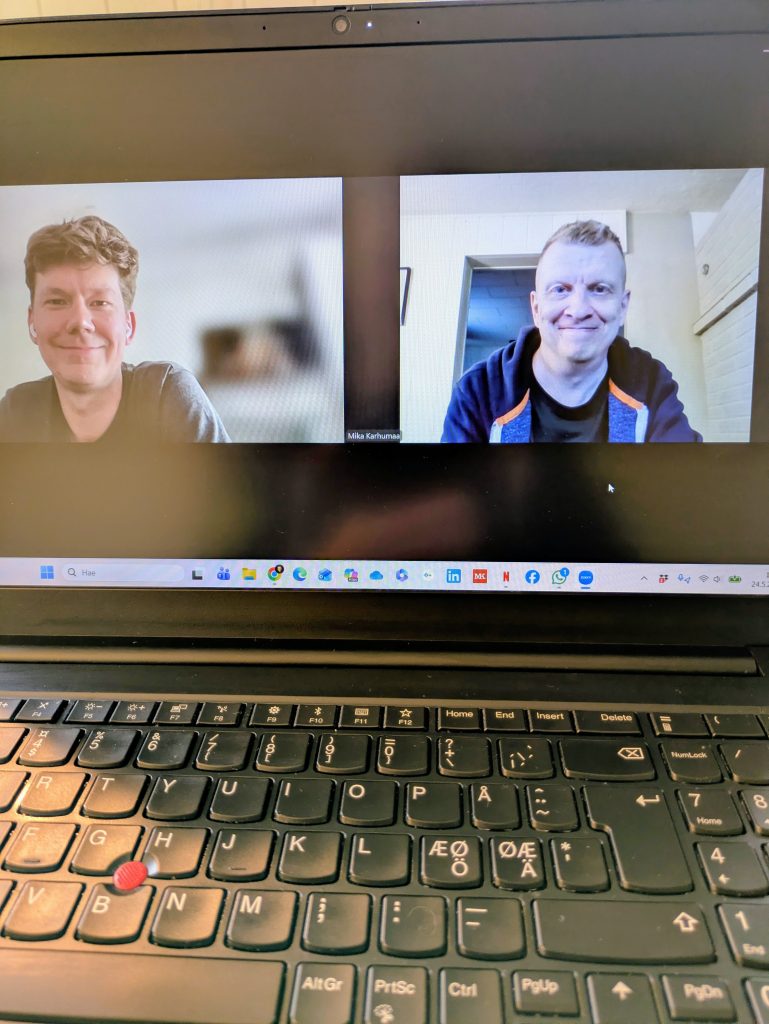
To see how these threads come together in real life, one doesn’t have to look far. A few weeks after initially drafting these thoughts, I found myself in a fascinating conversation with Ilmari Aitoaho from the band Muscular. We had actually crossed paths earlier during that same trip to Tallinn Music Week. Within just a few minutes of talking, it became clear that a new collaboration had organically begun.
Every artist possesses highly specific needs and a unique professional profile. Together, we crafted a tailored profile for Ilmari—a fully optimized online presence designed to better serve his specific goals and narrative. While working on this project, I realized just how beautifully he and Muscular intertwined with everything that had unfolded earlier this spring. It serves as a prime example of how music ecosystems naturally evolve, expand, and merge—all driven by real-world encounters and giving things the time they need to grow.
Let’s see where it leads.