Living the Manuscript: Generating Industrial Impact
While my upcoming book—Music Business, AI and The New Reality of Management—is well on its way, I’m in no rush to claim we’re at the final finish line just yet. Anyone who has ever written a real management manuscript knows the drill: amidst grant applications, daily operations, and navigating where things go next, you end up writing, tweaking, and rewriting in the quiet spaces between everything else.
Sometimes you spend days wrestling with a single page just to get the tone right, making sure the ideas don’t just sound smart on paper, but actually carry real industrial impact when put to work.
The manuscript isn’t abstract theory for me—I use its frameworks and mechanisms every single day in my management work. They evolve on their own simply because I’m putting them into practice constantly.
Beyond the Feed
Having an online presence today is obvious, but how you build it is where the real work lives. It’s not about posting just to feed an algorithm. It’s about structuring an artist’s digital footprint so that it authentically supports their story while creating the industrial impact needed, aligns with their long-term goals, and actively paves the way. When you get the tone and structure right, your online presence stops being a daily chore and starts doing its lift in the background.
Guiding the Currents of Distributed Agency
In the manuscript, I talk a lot about distributed agency. But in practice, it’s really about knowing how to direct currents of influence. You build structures, connect different moving parts, and get various networks, algorithmic tools, and human partners playing toward the exact same goal.
The real key to distributed agency isn’t just leverage—it’s fairness. You design these flows so that every single person, partner, and platform involved feels they are getting what they truly deserve from the ecosystem. When everyone wins, the momentum sustains itself.
Generating true industrial impact through distributed agency comes down to deep field knowledge and precise strategic positioning. When you understand the underlying mechanics of the industry, you know exactly where to place your artist and how to leverage automated and human networks in unison. It’s not about pushing blindly into the market; it’s about positioning yourself so that every distributed action creates measurable, long-term leverage.
From Legacy Foundations to First-Night Energy
Many people know my long-standing management work with legacy acts like Winterborn, Base Project, or Celesty. Over the years, that evolved into taking on roster pillars like Misha, Hanna-Maaria, and Muscular—artists I stepped in to manage after their careers were already well underway and moving. Managing established momentum takes a very specific, deliberate operational profile.
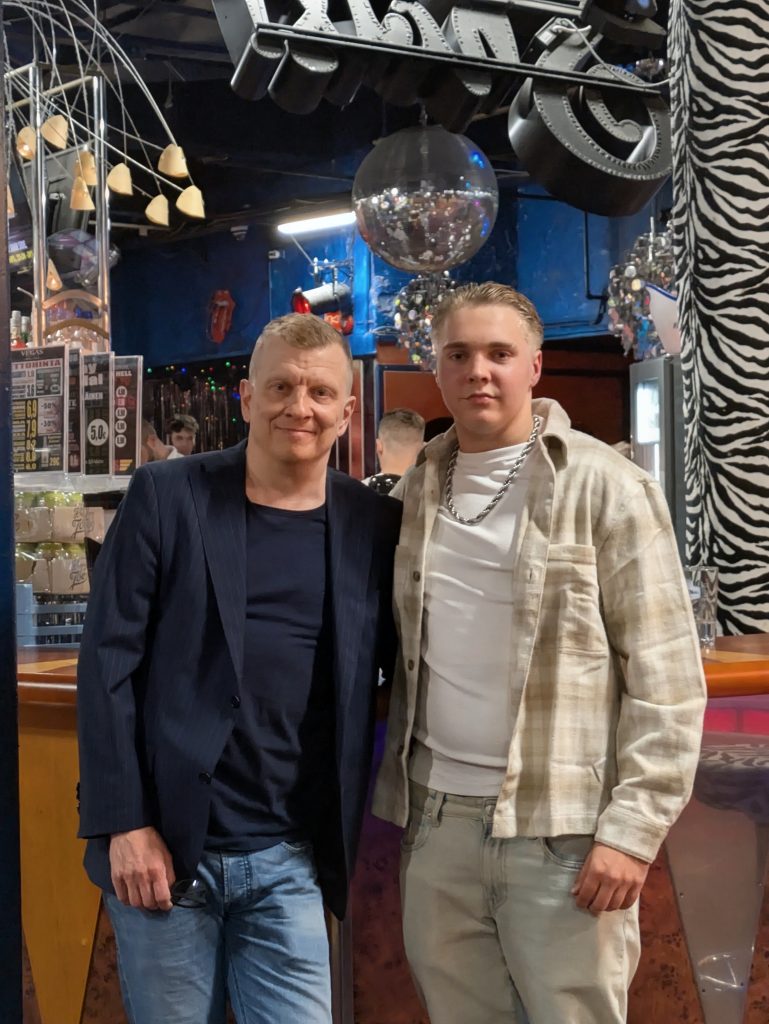
Working with JP, however, has been a completely different story. He came to me right out of the gate, roughly a week after releasing his first song ever. We are approaching the one-and-a-half-year mark of that journey now. Managing someone from absolute zero means dealing with a massive number of variables, first-time experiences, and uncharted waters.
Seeing him step up last Friday at Club Marilyn for his very first nightclub gig—completely fearless, locked in, and commanding the room—was incredible. When you navigate all those early-stage variables together and watch it just work on stage, that’s where the theory proves its worth.
From the Field directly to the Classroom
This constant interplay between hands-on practice and management theory is also directly shaping the upcoming lectures I’m preparing for the University of Louisiana.
It’s not just about bringing in our distinguished guest speakers from the US; it’s about grounding the academic frameworks in concrete real-world referrals—breaking down how these exact cases were built, why they succeeded, and what failed along the way. With every new operational cycle, we build up even more live material to bring to the classroom for next spring.
The management playbook is constantly morphing and changing shape, but one core principle never changes: at the end of the day, your job as a manager is to create favorable conditions for the artist, for yourself, and for the ongoing agenda—so that everything aligns seamlessly with the artist’s authentic story, goals, values, business, and long-term plans.
And that is exactly what we are continuing to build here today.
PS: Before the main book drops, consider this a quick prequel to what’s coming.